The Weaponization of Ideology and Dogma in Spiritually Impoverished Societies
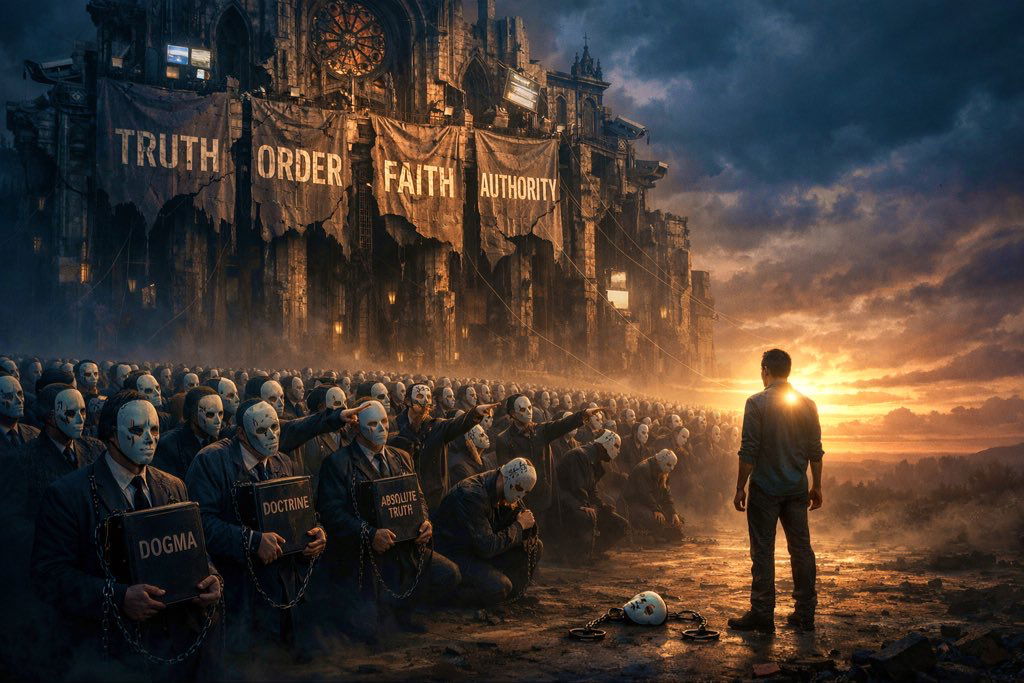
Summary: How political, religious, and cultural systems operate less as pathways to truth and more as mechanisms of control, using fear, guilt, shame, and division to maintain conformity and dependency. These systems shape identities and beliefs that people become deeply attached to, making self-questioning feel threatening and reinforcing collective patterns of manipulation and self-abandonment. Individuals often unconsciously participate in this dynamic by prioritizing belonging and validation over truth and inner integrity. However, the illusion of control begins to dissolve when a person engages in self-awareness, critical thinking, and inner work. By reclaiming personal authority and aligning with truth and discernment, individuals free themselves from manipulation and weaken the system’s influence.